Industry · Finance & fintech
Fintech video for financial services
The short answer
Blue Snow Developers makes finance video two ways: a brand film that sets the register of the product, and a data video that animates your real rates and market figures. 5 pieces here are built for the finance register, 2 of them delivered for one real client, and no frame is AI-generated.
Brand films and data videos for financial products — banks, lenders, wealth platforms and payments — built by hand in code from the figures you supply. No stock, no generative model, no invented number.
Financial video built from your figures, not around them
Most finance video is a stock-footage montage with a number typed over it. The number is decorative: nobody could trace it, and if it changed next quarter the film would have to be re-shot. We build the other way round. A rate line, a bar tape, a share-of-total breakdown, a map card per market — each one is a real component driven by the dataset you supply, so the figure on screen is your figure and the film can be re-rendered when the figure moves.
That is the whole of the studio's specialty, and it is described end to end on the data-driven video page, from the brief through the source-and-footnote layer to the delivered masters. This page is the finance-shaped view of it: what changes when the subject is money, and which of the work behind it was made for a real client rather than self-initiated.
The finance work — and which of it was made for a real client
2 of the 5 were made for Pulse Mortgage, a real lender we built and delivered them for: a brand promo and a vertical market update. They are the only real client films on this site, and they both sit in this industry — a mortgage lender rather than a fintech product company, which is financial services and an adjacent register. The other 3 are self-initiated: one is a fintech brand film for a company that does not exist, and two are data-films built on public datasets rather than on an invented brand. All three are labelled (Concept) wherever they appear, including in the sentences below, because a fictional brand shown without that label is a fabricated client.
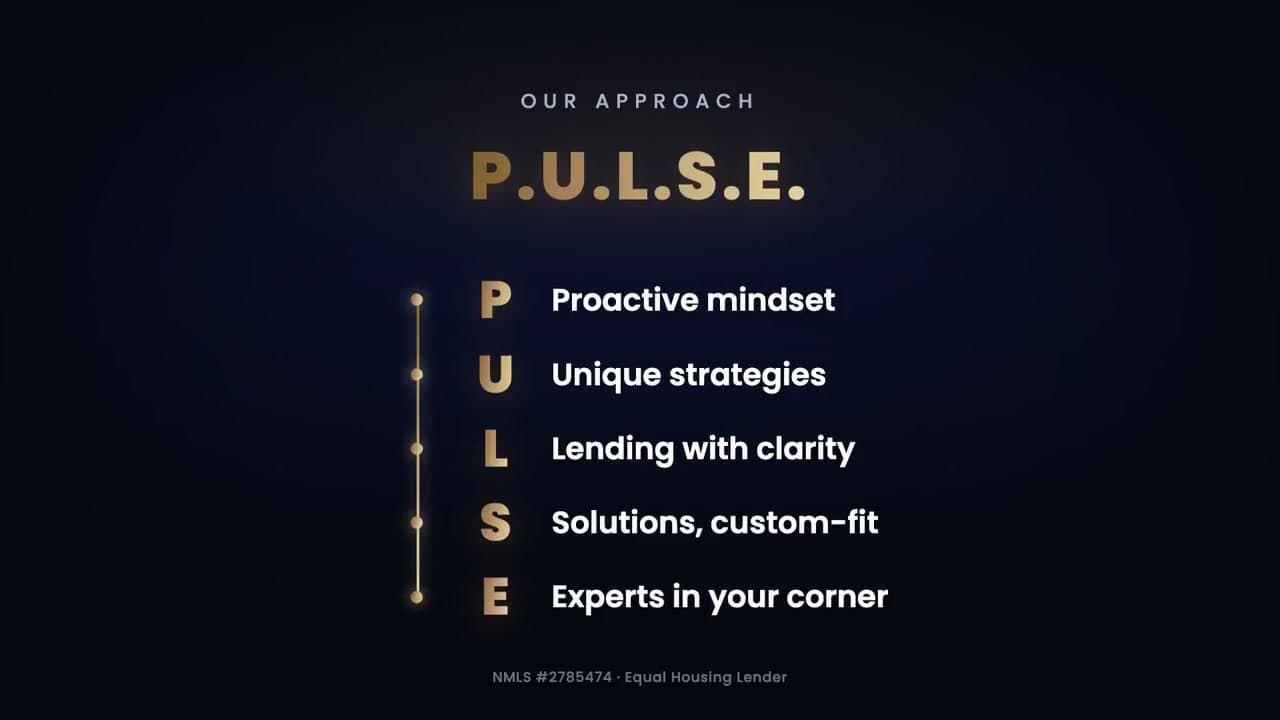
Pulse Mortgage
Real client work · Brand promo for a real mortgage client
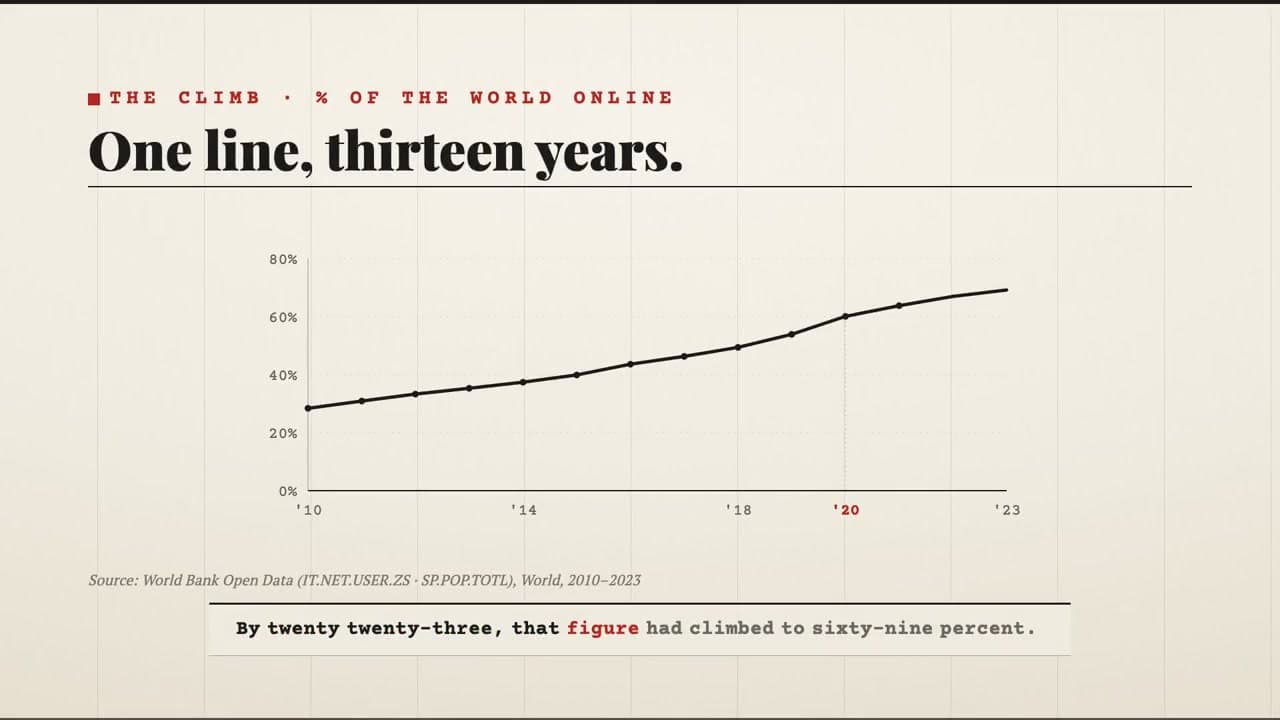
The Dispatch (Concept)
Studio concept · Narrated editorial data-story — a decade in numbers, spoken end to end
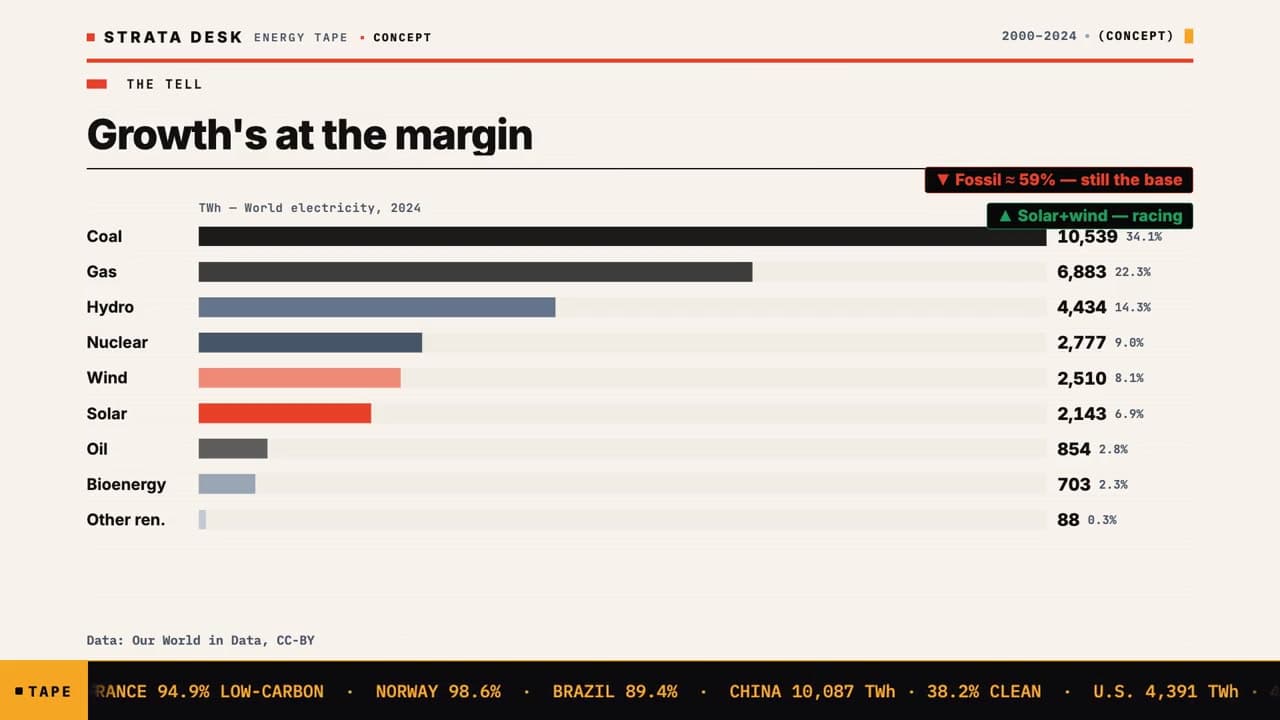
Strata (Concept)
Studio concept · Multi-chart report-film, narrated — beat-synced D3 charts
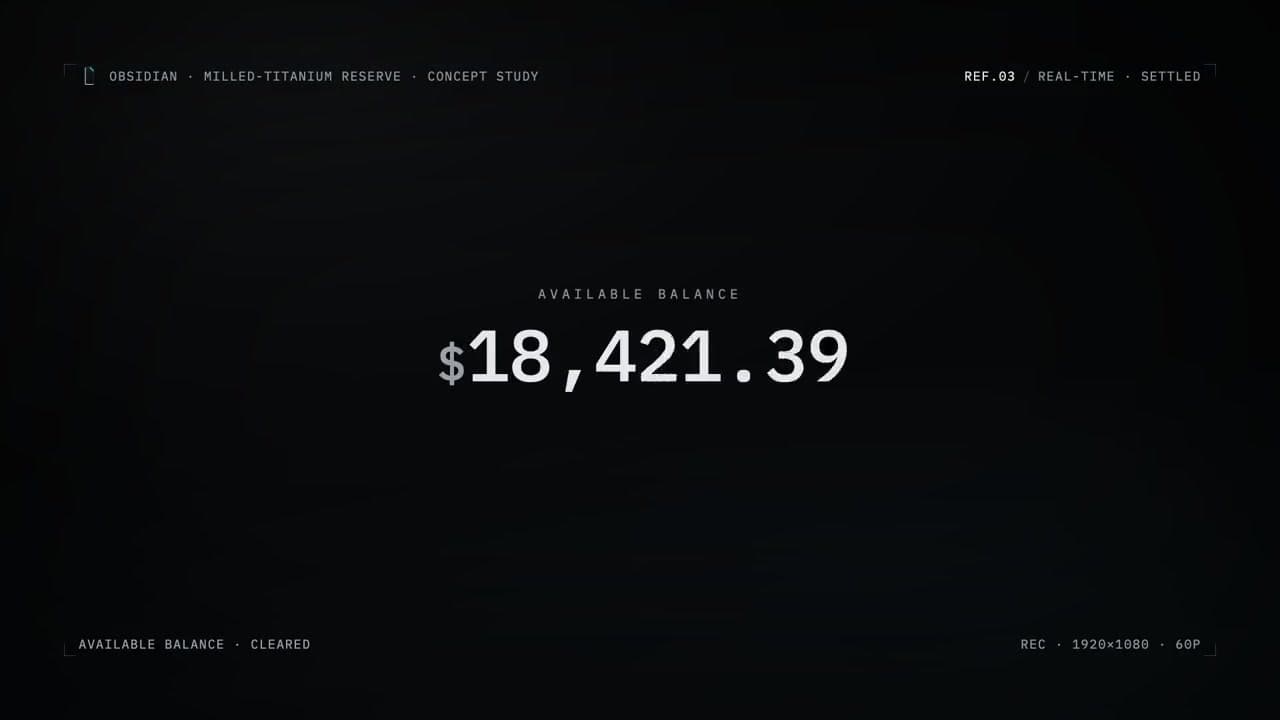
OBSIDIAN (Concept)
Studio concept · Milled-titanium private-vault fintech reveal
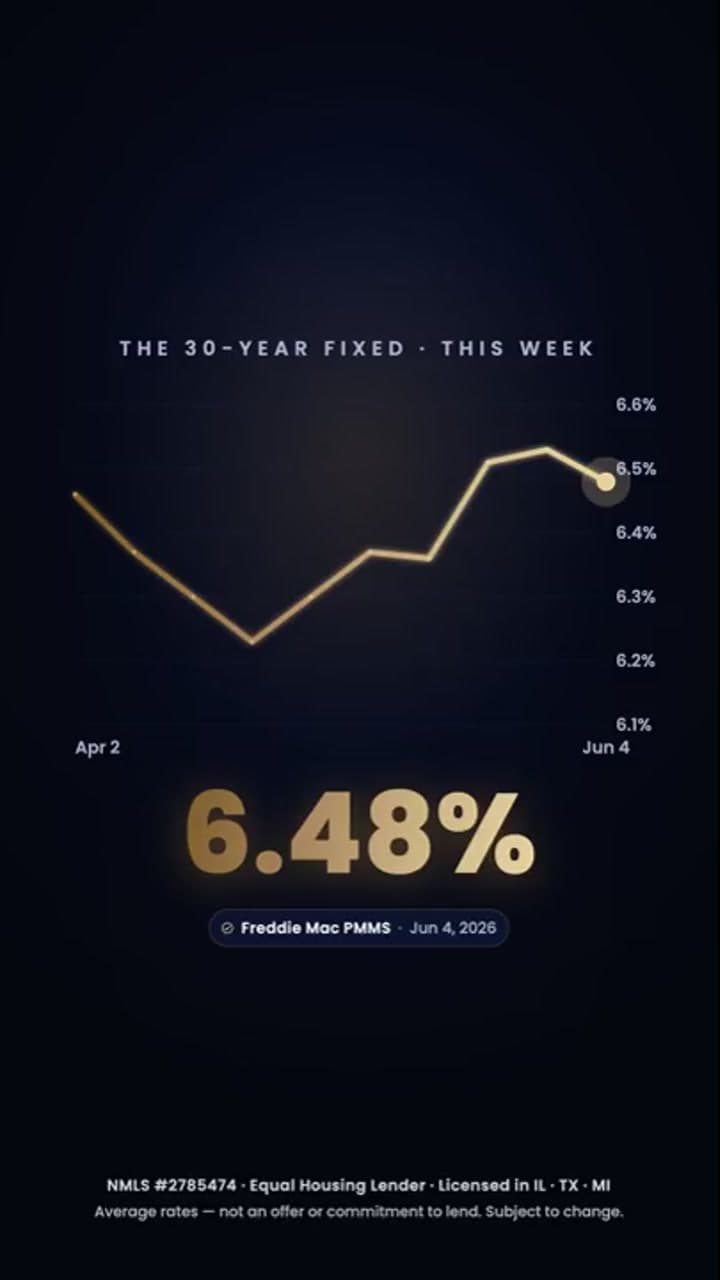
Pulse — Market Update
Real client work · Real-client 9:16 market-update data story (dated weekly rate and market figures)
The vertical cut sits on its own row because it is a different shape, not a cropped version of a wide one. It is composed for the phone from the first frame, and its fine print carries what a lender’s reviewer looks for: the rate is stamped with its source and the date it was taken.
The market-update video, built to be published again
The most useful thing a finance brand can own is not one film — it is a format it can publish again. Pulse’s vertical market update is built once as a template, so the next read is a re-render against new figures rather than a new build. It is a native 9:16 build rather than a landscape film with the sides cropped off, which is why it survives the feed — the same discipline as the vertical single-figure data drop (Concept), where one sourced number has to be legible at arm’s length on a phone.
The same shape works outside mortgage, and two of these are built on public data rather than on an invented brand — the format is the point, not the logo. Strata (Concept) is the multi-chart briefing: nine bars of world electricity generation, each with its figure and its share, under a headline that states the read. Swap the dataset and it is your quarterly review. The Dispatch (Concept) is the editorial version — thirteen years of one series drawn as a single line, narrated, the shape an annual letter wants. And the index-card format (Concept) renders one composition once per market — six cities, six map cards, six figures, all from a single build — which is how a lender covers every territory it writes in without commissioning a film for each one.
Why a fintech brand film needs its own register
A payments app and a private bank are not the same brief even though both are "fintech". OBSIDIAN (Concept) is the restrained end: milled titanium, banking-grade type discipline, motion that is deliberate rather than busy — money that does not need to shout. It is a self-initiated concept for a brand that does not exist, built to show that register rather than to imply a client.
We reuse the engineering behind every film and never the look, so a wealth platform and a challenger card do not end up wearing the same palette — the full set of brand films is collected on one page, across every category the studio has built in. Where a brand needs the system and not just the film — type scale, colour tokens, motion rules, a logo that behaves — that is a brand kit, and the full identity deliverable is published in the work. The studio’s own identity system is documented the same way, which is the honest way to show you how one is made.
No frame here is AI-generated, which matters more in finance
A generative model can invent a detail that was never in your data — a tick on an axis, a label, a face. In most categories that is a quality problem. In finance it is a disclosure problem, and it arrives after the film is published. Every frame here is a real component rendered deterministically: the same build produces the same film twice, the figures come from the dataset you supplied, and a frame can be traced back to the number behind it.
You can check that on this page rather than take it on trust. The market-update film above carries its source in the frame — the rate figure sits under a chip naming the series it came from and the date it was taken — and the fine print holds the lender's licence number, its Equal Housing Lender mark, the states it is licensed in and the line that says these are average rates and not an offer to lend. That furniture is not decoration added afterwards; it is built into the composition, because a film for a regulated business has to survive the person whose job is to read the small type.
That is a constraint we chose, not a limitation we are apologising for — and it is stated on every page of this site rather than only where it flatters us. The studio is one engineer who writes the code and cuts the frames, which is also why there is no account layer between the brief and the person building it.
How a finance video project runs
You send the figures and the brand; we design how each number moves, build it as code, and deliver 16:9, 9:16 and 1:1 from a single production. You supply and approve every number before it is animated. The full service list and how a project runs covers the stages in order, and the complete portfolio is filterable by industry, deliverable and format if you want to see the range before you write a brief. When the brief is clear, talk to us about a finance brand film or a market-update video.
If you would rather see it than read about it, send us your brand name and your site. For the brands we take on that round we build a watermarked sample film from your real colours and logo — the free sample is real craft, yours to judge, with nothing to sign.
The same studio builds finance software, not only the films about it. King of Spades, a B2B platform with payments and Twilio SMS, was built and delivered here, so a product that needs a sign-up flow, a payments integration or a customer dashboard can come from the same place as its launch film. Payments, integrations and dashboards are set out with the rest of the software work.
What finance and fintech clients ask first
We are a lender, not a fintech product — is this for us?
Yes, and it is worth being precise about which of it is proven. The only real client in this film portfolio is a mortgage lender, so the client-work evidence here is financial services rather than a fintech product company. The fintech brand-film work on this page is our own self-initiated concept, labelled as such. The craft is the same either way: the figures come from your dataset, the film is built in code, and nothing is generated.
Can you build the video from our real financial figures?
Yes — that is the specialty rather than an add-on. Rate lines, bar tapes, comparison charts and maps are built as real components and driven by the dataset exactly as it is supplied, so what appears on screen is your figure and not a redrawn approximation of it. You supply and approve every number before it is animated, and the source and the date it was taken can sit in the frame with it.
Is any of the video AI-generated?
No. Nothing on this site uses a generative image or video model — no AI footage and no AI frames. Every frame is a real component rendered deterministically, which means the same build produces the same film twice and a generative model cannot invent a detail that was never in your data. In finance that is the difference between a film you can put in front of a review and one you cannot.
Can a market update be refreshed on a regular cadence?
Yes — that is what the format is built for. The market-update video is built once as a template rather than cut by hand, so publishing the next read means re-rendering it against new figures instead of building a new film. It was built that way for Pulse Mortgage, the only real client in this film portfolio, as a native vertical 9:16 cut made for the feed.
Will a finance video hold up to a brand or legal review?
It is built to be checkable, which is the first thing a review looks for. Every figure comes from the dataset you supplied rather than from a model, the source and footnote layer is part of the design rather than an afterthought, and the build is reproducible so a frame can be traced back to the number behind it. The studio does not give legal or compliance advice — your reviewers still sign it off — but every figure in the film has a source you can point at.
Do you deliver vertical and square cuts for social?
Yes. 16:9, 9:16 and 1:1 are cut from a single build rather than re-edited afterwards, so a film composed for the feed is genuinely composed for the feed instead of being a landscape cut with the sides cropped off. The real-client market update on this page is a native vertical build — composed for the phone from its first frame rather than trimmed down to it.
See it on your numbers first
Send your brand name and your site. Each round we take on only a handful, and for those we cut a watermarked sample film from your real palette, your logo and a figure you already publish — craft you can judge, nothing to sign.
Written by Baljeet Aulakh, who builds every film in this portfolio. Last updated . No AI-generated frames.